Mariah Robertson was born in 1975 in Indianapolis, Indiana, grew up in Sacramento, California, and lives and works in New York. A photographer often working without a camera, Robertson creates images through ceaseless darkroom experimentation.
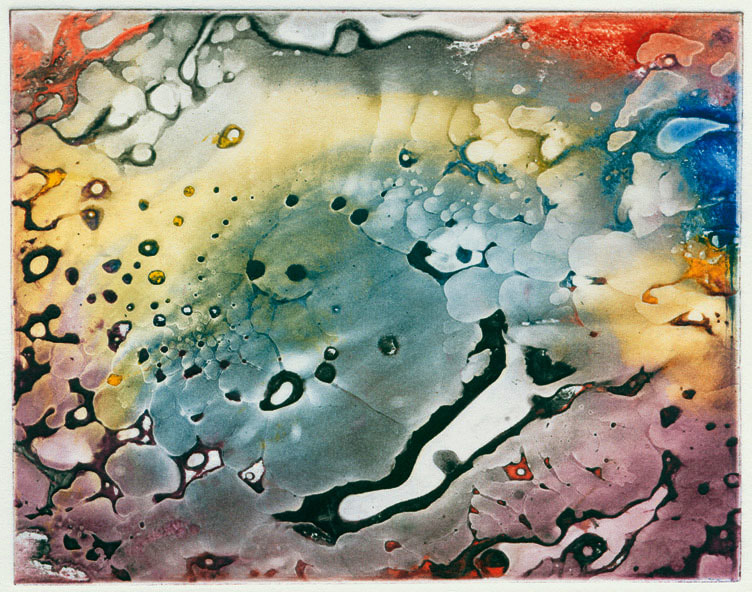
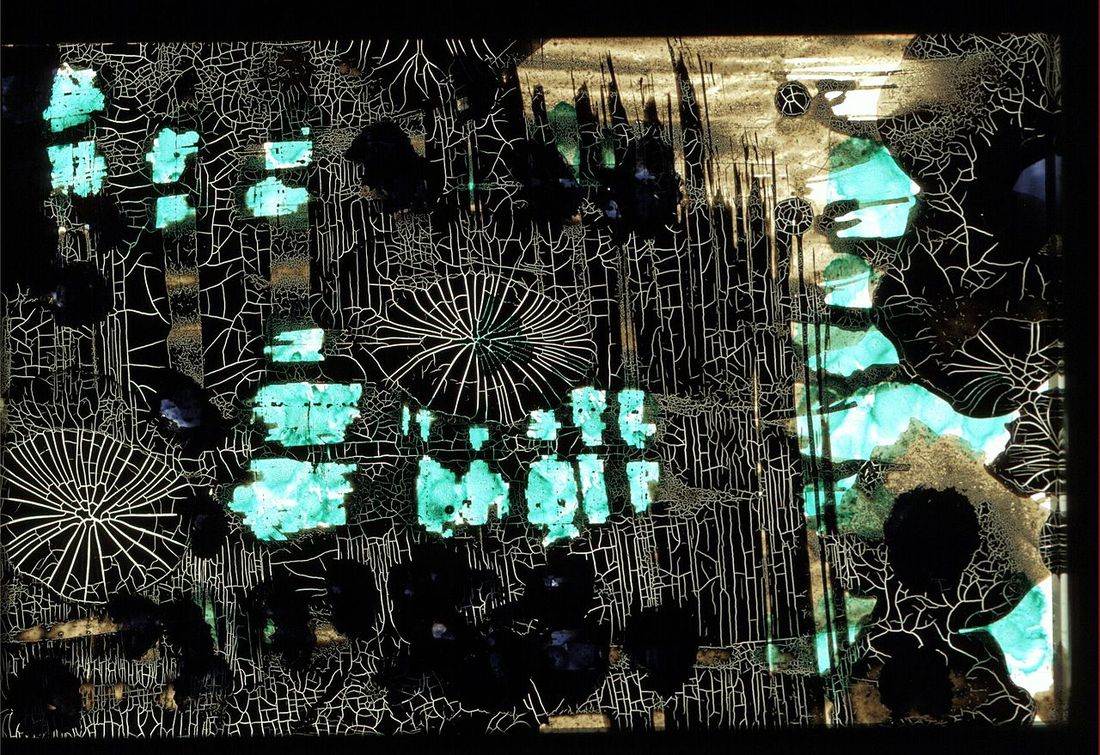
How does an artist come to grips with the uncontrollable? Filmed over the course of four years, artist Mariah Roberston experiments with photographic chemistry in her Brooklyn darkroom, leading to a striking series of colorful cameraless abstractions. Confronted with a roll of paper that was accidentally exposed, Robertson begins to play with the ruined paper, saying “I always enjoy trying to make something out of the unwanted thing and go deeper into the disaster.” Robertson experiments with developer, fixer, and water at various concentrations and temperatures, creating vibrant images that appear to have optical or painterly effects but instead are the result of arrested chemical reactions.
Robertson faces another challenge when she discovers that metallic photo paper no longer comes in precut sheets but only on coiled rolls. Forced to adjust, she responds by tearing rolls of paper into free-form sheets with jagged edges. In contravention of standard exhibition practice, Robertson installs the fully exposed rolls of 100 feet or more as unframed sculptural ribbons, hanging them in looping swathes that respond to the surrounding architecture. Contemplating what it means to exhibit her one-of-a-kind artworks in such a vulnerable way, Robertson suggests that “all your attempts are gonna fail at controlling life, so you should let that go so you can actually see what’s happening.”
How does an artist come to grips with the uncontrollable? Filmed over the course of four years, artist Mariah Roberston experiments with photographic chemistry in her Brooklyn darkroom, leading to a striking series of colorful cameraless abstractions. Confronted with a roll of paper that was accidentally exposed, Robertson begins to play with the ruined paper, saying “I always enjoy trying to make something out of the unwanted thing and go deeper into the disaster.” Robertson experiments with developer, fixer, and water at various concentrations and temperatures, creating vibrant images that appear to have optical or painterly effects but instead are the result of arrested chemical reactions.
Robertson faces another challenge when she discovers that metallic photo paper no longer comes in precut sheets but only on coiled rolls. Forced to adjust, she responds by tearing rolls of paper into free-form sheets with jagged edges. In contravention of standard exhibition practice, Robertson installs the fully exposed rolls of 100 feet or more as unframed sculptural ribbons, hanging them in looping swathes that respond to the surrounding architecture. Contemplating what it means to exhibit her one-of-a-kind artworks in such a vulnerable way, Robertson suggests that “all your attempts are gonna fail at controlling life, so you should let that go so you can actually see what’s happening.”
Chemigrams
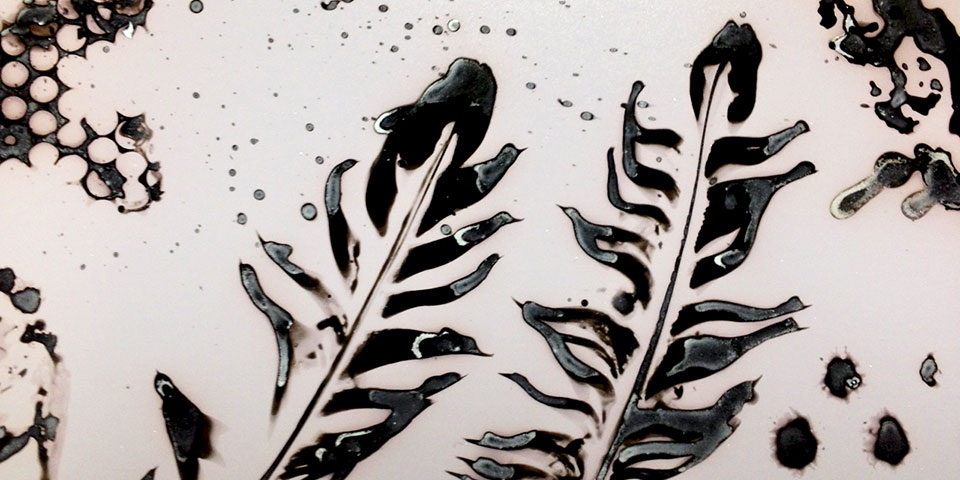
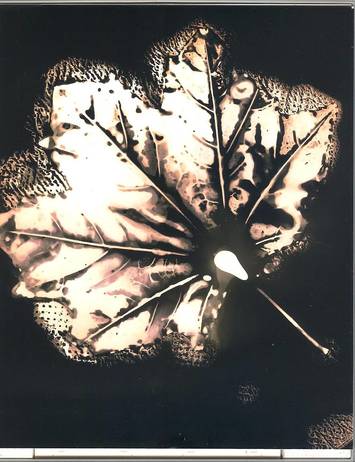
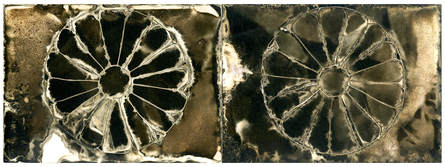
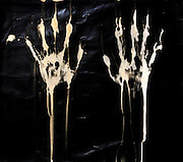
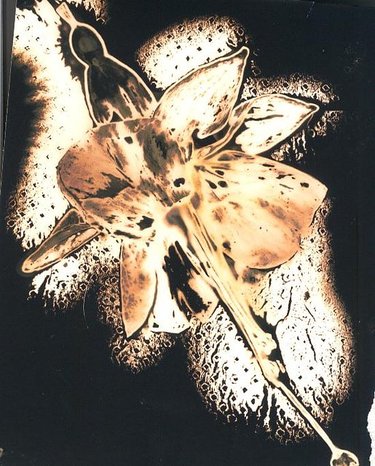
A chemigram (from "chemistry" and gramma, Greek for "things written") is an experimental piece of art where an image is made by painting with chemicals on light-sensitive paper (such as photographic paper).
Process for Chemigrams
A chemigram is made by painting with chemicals on photographic paper and lies within the general domain of experimentation in the visual arts. It requires the use of materials from silver halide-based photography (light-sensitive paper, developer, and fixer), but it is not a photograph. Like the photogram, the chemigram is made without a camera, yet it is created in full light instead of in the darkness of the darkroom. For this reason it is not "light that writes" (photo graphein in the Greek) but rather "chemistry that writes".
Chemigrams can be made solely with photo paper, developer, and fixer, with results that will somewhat resemble watercolor. The possibilities can be multiplied by using materials from painting (such as varnish, wax, or oil), These kinds of experiments are akin to those of Paul Klee, Max Ernst, and Antoni Tàpies.
Unlike chemigrams the production process of chemograms consists of two different steps. First an enlarger is used to partly or fully process a photographic image onto photographic paper in the darkroom and thereafter the chemicals are applied in full light.
A chemigram is made by painting with chemicals on photographic paper and lies within the general domain of experimentation in the visual arts. It requires the use of materials from silver halide-based photography (light-sensitive paper, developer, and fixer), but it is not a photograph. Like the photogram, the chemigram is made without a camera, yet it is created in full light instead of in the darkness of the darkroom. For this reason it is not "light that writes" (photo graphein in the Greek) but rather "chemistry that writes".
Chemigrams can be made solely with photo paper, developer, and fixer, with results that will somewhat resemble watercolor. The possibilities can be multiplied by using materials from painting (such as varnish, wax, or oil), These kinds of experiments are akin to those of Paul Klee, Max Ernst, and Antoni Tàpies.
Unlike chemigrams the production process of chemograms consists of two different steps. First an enlarger is used to partly or fully process a photographic image onto photographic paper in the darkroom and thereafter the chemicals are applied in full light.
|
|
Chemigram Directions and Requirements
You will be making some Chemigrams with a black background and some with a white, the process is slightly different for each one.
You will be turning in
Step 1
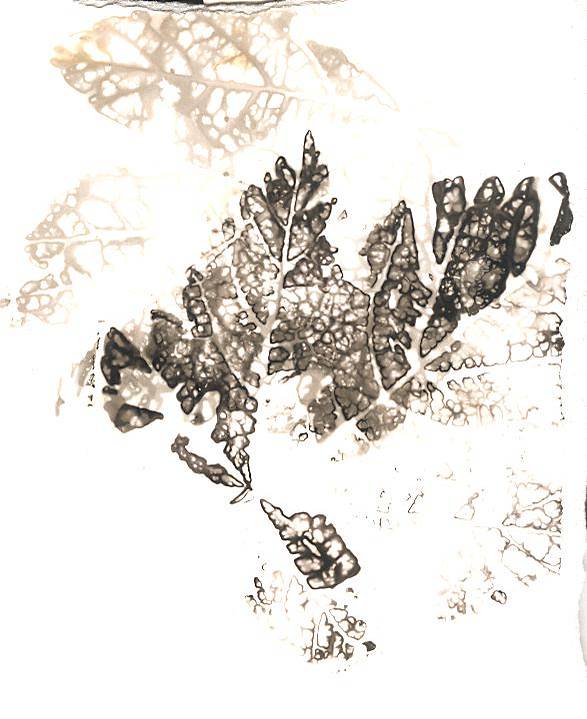
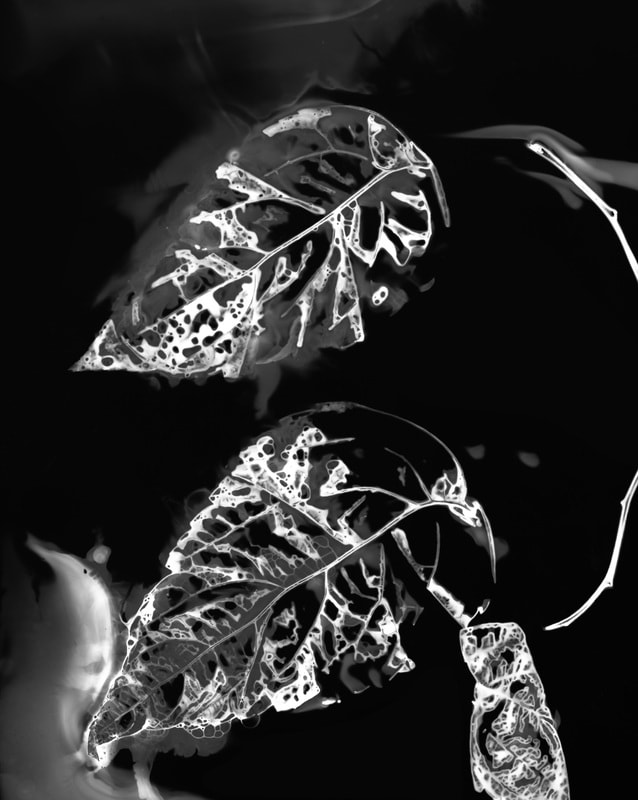
After watching the demo bring in some objects you would like to use for your chemigrams. Items that work best are those that will soak up some of the chemicals and have interesting shapes or textures. These should be things you will be prepared to throw away when finished. Examples: leaves, flowers, cloth, fruits, vegetables, etc. Have these items ready to go when you are going into the darkroom.
You will be making some Chemigrams with a black background and some with a white, the process is slightly different for each one.
You will be turning in
- 2 Chemigrams with a white background
- 2 Chemigrams with a black background
- 1 hand colored Chemigram (white background) for grading.
Step 1
After watching the demo bring in some objects you would like to use for your chemigrams. Items that work best are those that will soak up some of the chemicals and have interesting shapes or textures. These should be things you will be prepared to throw away when finished. Examples: leaves, flowers, cloth, fruits, vegetables, etc. Have these items ready to go when you are going into the darkroom.
|
Step 2
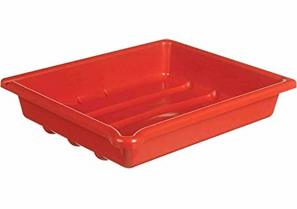
Get a piece of photo paper from the darkroom and place it shiny side up in a tray. |
|
|
FStep 3
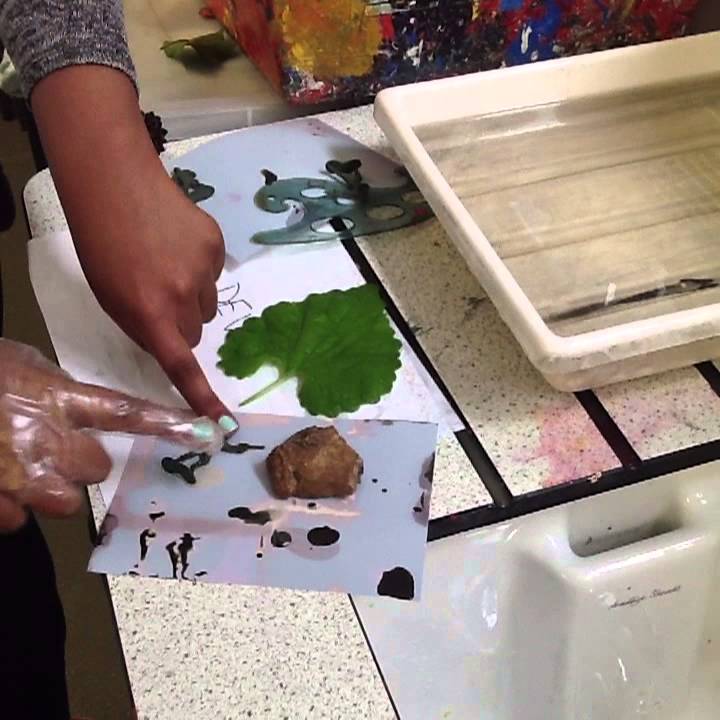
BLACK BACKGROUND For the black background, dip your objects into the fix and arrange them on your paper. Bring your tray out to the classroom. Place a paper towel over the objects and press them down while in the light of the classroom for 40 seconds. You can move the objects around during this time, try different objects, or even paint fix in areas. WHITE BACKGROUND For a white background, dip your objects into the developer and arrange them on your paper. Bring the tray out to the classroom and press them down into the paper for 2-3 minutes. Again, during this time you can move objects around, try different objects, or paint some developer. |
|
Step 4
BLACK BACKGROUND
Remove objects from the paper and bring it back into the darkroom. Place paper into the developer tray and follow regular print processing.
WHITE BACKGROUND
BLACK BACKGROUND
Remove objects from the paper and bring it back into the darkroom. Place paper into the developer tray and follow regular print processing.
WHITE BACKGROUND
Remove objects from the paper and bring it back into the darkroom. Place the paper into the stop tray and continue with regular print processing from there.
|
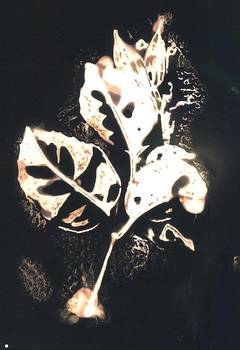
2 Black Background Chemigrams
|
2 White Background Chemigrams
|
1 Hand Colored (White Backgound)
|
Chemograms
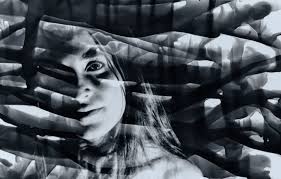
A chemogram (from "chemistry", "optic" and gramma, Greek for "things written") is an experimental art where a photographic image is partly or fully enlarged and processed onto photographic paper in the darkroom and afterwards selectively painted over in full light with chemicals used in photographic processing. Due to the production process chemograms can be considered works of abstract photography.
Chemograms were invented in 1974 by the German photo artist Josef H. Neumann.
Chemograms were invented in 1974 by the German photo artist Josef H. Neumann.
Process for Chemograms
A chemogram is a product of both photographic processing and painting on photographic paper. Unlike chemigrams the production process of chemograms consists of two different steps. First an enlarger is used to partly or fully process a photographic image onto photographic paper in the darkness of the darkroom. As soon as the preferred development of the image is reached, the photographic process is interrupted and the photographic paper is exposed to full light and treated with developer and fixer (or other chemicals) like a chemigram. The procedure can be repeated until the chemogram is finished.
During the first part of the production the artist is in full control regarding the selection of the image and the duration of the photographic processing, whereas in the second part the control only remains with the spots where the colorless chemicals are applied. The exact reactions of the chemicals, which generate the final colours in those spots, are widely unpredictable. Therefore each chemogram is unique.
A chemogram is a product of both photographic processing and painting on photographic paper. Unlike chemigrams the production process of chemograms consists of two different steps. First an enlarger is used to partly or fully process a photographic image onto photographic paper in the darkness of the darkroom. As soon as the preferred development of the image is reached, the photographic process is interrupted and the photographic paper is exposed to full light and treated with developer and fixer (or other chemicals) like a chemigram. The procedure can be repeated until the chemogram is finished.
During the first part of the production the artist is in full control regarding the selection of the image and the duration of the photographic processing, whereas in the second part the control only remains with the spots where the colorless chemicals are applied. The exact reactions of the chemicals, which generate the final colours in those spots, are widely unpredictable. Therefore each chemogram is unique.
|
|
